Because baby teeth are temporary, they are often not taken seriously. When decay appears in a child’s baby tooth, many parents delay treatment, thinking “they’ll be replaced anyway”. Yet decay in baby teeth is not a temporary problem confined to that one tooth. It can affect many areas, from pain and feeding difficulties to speech development and the alignment of the permanent teeth.
Tooth decay in childhood is one of the most common chronic health problems in the world. What is more, it is largely preventable when noticed early. If neglected, however, it can lead to consequences ranging from infection and tooth loss to orthodontic problems later in life.
In this article, Frig Dent Dental Clinic looks in detail at the causes and symptoms of decay in baby teeth, why it should be taken seriously and how it can be prevented.
Why Are Baby Teeth So Important?
Baby teeth play a critical role in a child’s oral development. They are not just temporary teeth.
The functions of baby teeth:
- They allow food to be chewed
- They contribute to speech development
- They support the development of the jawbones
- They act as space maintainers for the permanent teeth
- They influence smile aesthetics and self-confidence
Losing a baby tooth early can leave the permanent tooth coming through beneath it without enough room.
What Is Decay in Baby Teeth?
Decay in baby teeth is damage to the enamel and dentine caused by acids produced by bacteria on the tooth surface. Because the enamel of baby teeth is thinner, decay can sometimes progress faster in children than in adults.
For that reason, what looks like a small mark can turn into a painful cavity in a short time.
What Causes Decay in Baby Teeth?
1. Sugary Foods and Frequent Snacking
Biscuits, fruit juice, sweetened milk, packaged snacks and frequent between-meal snacking all increase the risk of decay.
2. Falling Asleep with a Bottle at Night
Rapid decay can develop in the front teeth of children who fall asleep with milk, formula or sugary drinks in particular. This is commonly known as bottle caries.
3. Inadequate Brushing
Most children cannot clean their teeth well enough on their own. Without parental help, plaque buildup can increase.
4. Transfer of Bacteria into the Mouth
Behaviours such as sharing a spoon or cleaning a dummy in your own mouth can transfer adult oral flora to the child.
5. Lack of Regular Check-Ups
Early-stage decay usually does not cause pain. Without check-ups, it is noticed late.
An Interesting Fact: Decay Doesn’t Have to Be Black at First
Many families think of decay only as a black hole. In fact, decay in baby teeth sometimes starts as:
- White, chalky spots
- Yellow-brown areas
- Roughness on the tooth surface
If this early stage is spotted, treatment is much easier.
What Are the Symptoms of Decay in Baby Teeth?
- White, yellow or brown marks on the tooth
- Sensitivity to cold or sweet foods
- Pain while eating
- Waking up crying at night
- Bad breath
- A chip or fracture in the tooth
- Swelling in the cheek (which can be a sign of advanced infection)
A child may not always say “my tooth hurts”. They may simply avoid chewing or become irritable.
Why Is “It’ll Fall Out Anyway” the Wrong Approach?
Leaving a decayed baby tooth untreated can lead to a number of problems:
1. Pain and Sleep Problems
Toothache can seriously disrupt a child’s sleep pattern.
2. Feeding Difficulties
A child may avoid chewing with a painful tooth.
3. Infection
Advanced decay can cause abscesses.
4. Speech Development
Loss of front teeth can affect the production of certain sounds.
5. Effects on the Permanent Teeth
The development of the permanent tooth underneath can be affected.
6. Orthodontic Problems
The gap left by a tooth extracted early can close up, causing crowding.
How Is Decay in Baby Teeth Treated?
Treatment is planned according to the extent of the decay.
1. Early-Stage Preventive Treatment
For initial decay, fluoride applications and monitoring may be appropriate.
2. Fillings
The decay is removed and the tooth is repaired with a suitable material.
3. Paediatric Crowns
For baby teeth with extensive loss of tooth structure, durable crown solutions can be applied.
4. Root Canal Treatment (Pulp Therapy)
Where decay has reached the nerve, this can be done to save the baby tooth.
5. Extraction and a Space Maintainer
If the tooth cannot be saved, a space maintainer can be planned after extraction to preserve the gap.
At Frig Dent Eskişehir Dental Clinic, our approach aims to preserve the baby tooth wherever
possible.
How Can Decay in Baby Teeth Be Prevented?
Daily protective steps:
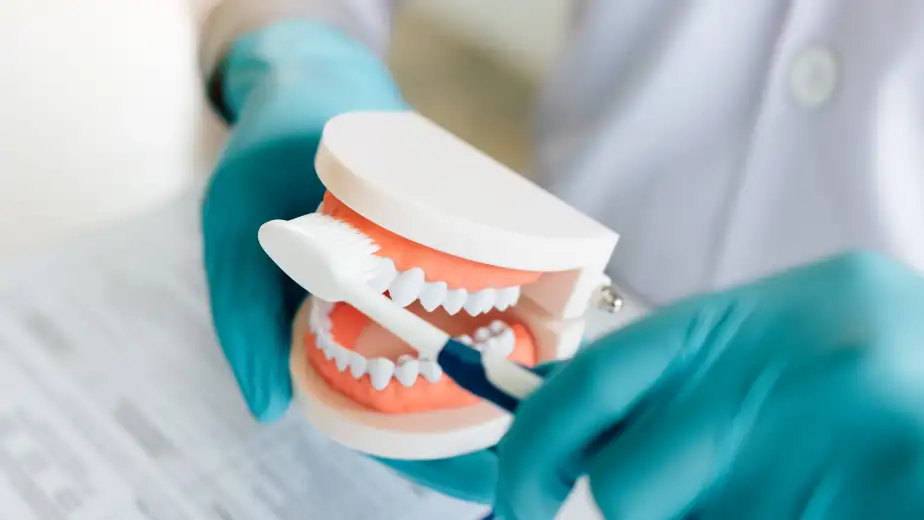
- Start brushing as soon as the first tooth appears
- Brush twice a day with an age-appropriate toothpaste
- Don’t let your child fall asleep with a bottle
- Limit sugary snacks
- Encourage them to drink more water
- Brush with parental support
- Attend regular check-ups
When Should the First Dental Check-Up Be?
The first check-up is recommended after the first tooth appears, or by the age of one at the latest. This allows the risk of decay to be assessed early and the family to be shown the right care habits.
An Interesting Observation: Children Don’t Always Link Pain to Their Teeth
Some children describe toothache as “earache”, “cheek pain” or simply as feeling unsettled. For that reason, if night-time waking keeps recurring, a dental examination is important.
Decay in baby teeth is not a temporary problem. It can affect many areas, from a child’s pain and
nutrition to their speech and the future alignment of their teeth. Decay diagnosed early can be treated more easily and more comfortably.
If your child has marks, sensitivity or suspected decay on their teeth, get in touch with Frig Dent Dental Clinic for an expert assessment. The foundation of healthy permanent teeth begins with healthy baby teeth.