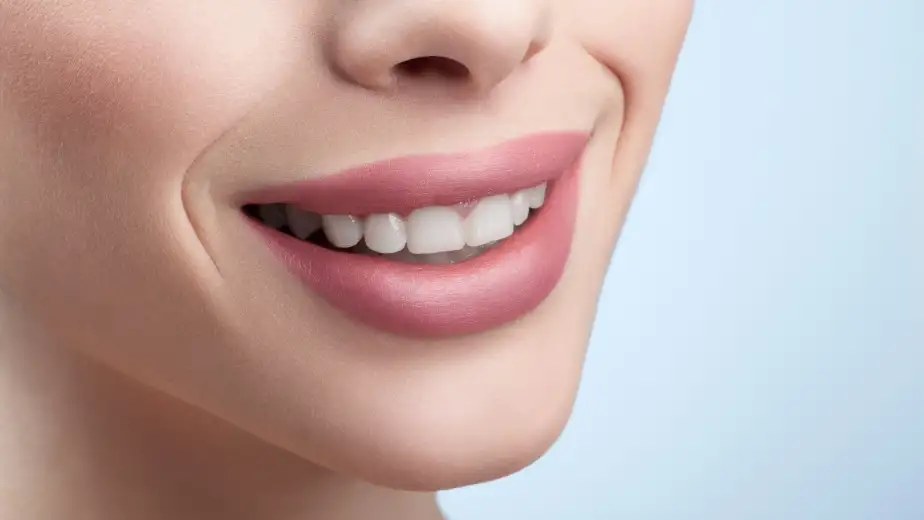
Teeth whitening is a professional procedure that removes the yellowing and staining that builds up on teeth over time, giving you a whiter, more attractive smile. It is today one of the most frequently requested treatments in aesthetic dentistry, because it produces a visible difference in a short time without any tissue being removed from the tooth.
Factors such as coffee, tea, smoking and ageing can cause teeth to darken. With a professional whitening procedure, teeth can be lightened by several shades.
At Frig Dent in Eskişehir, we carry out safe and effective teeth whitening in the clinic using the Opalescence whitening system.
Why Do Teeth Change Colour?
Discolouration does not have a single cause. Understanding the source of the colour change is important, because it determines how well whitening will work.
External (extrinsic) discolouration
- Coffee, tea and black tea
- Red wine and cola-type drinks
- Smoking and tobacco products
- Strongly coloured foods and sauces
- Plaque and tartar build-up
Internal (intrinsic) discolouration
- Natural ageing and thinning of the enamel
- Some medications used in childhood
- Trauma to a tooth
- Excess fluoride during the developmental period
External stains generally respond very well to whitening. Internal discolouration may respond more slowly, and in some cases different aesthetic treatments may be more appropriate.
Why Do We Use Opalescence?
Opalescence is a professional whitening system used in dentistry worldwide. We prefer it at Frig Dent because it gives predictable results and is designed with patient comfort in mind.
At our clinic we apply Opalescence as an in-office procedure only. We do not supply take-home trays or gels for use at home. The whole process is carried out in the clinic, from start to finish, by your dentist.
Its main features:
- A high-concentration gel developed specifically for in-clinic use
- A content that contains fluoride and potassium nitrate, supporting the reduction of sensitivity
- A viscous gel structure that stays where it is applied and does not run onto the gums
- Whitening in controlled steps, with the shade checked between each step
Opalescence is not an over-the-counter product; it is applied under the supervision of a dentist. This is what separates it from unsupervised products bought online.
Why do we prefer the in-office method?
- The gums and soft tissues are protected throughout with a barrier
- The gel concentration and application time are fully controlled
- The result becomes visible in a single appointment
- If sensitivity develops, it can be managed on the spot
- There is no risk of incorrect use, as there can be with unsupervised home application
How Is Teeth Whitening Done?
Teeth whitening is generally carried out in the clinic using special whitening gels.
Before the procedure
- The teeth and gums are examined
- Decay, cracked fillings and gum problems are treated first
- Scaling is carried out if needed, because whitening does not work under tartar
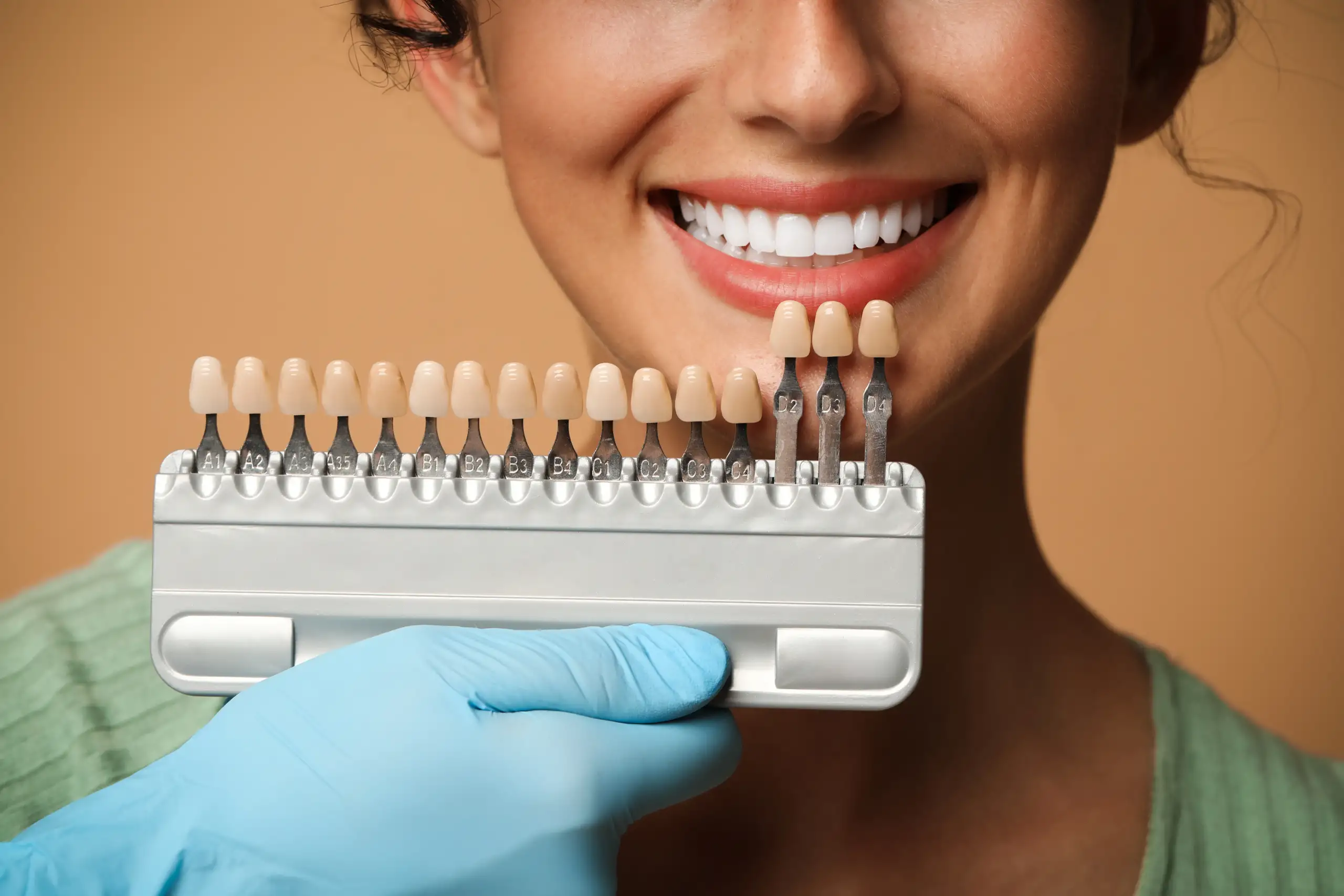
- The starting shade is recorded so the change can be measured
In-clinic whitening (Opalescence Boost)
- The teeth are cleaned
- A protective barrier is applied to the gums
- The whitening gel is applied
- It is left to work for the recommended time and renewed in cycles
- The gel is removed and the result is compared with the starting shade
Average procedure time: 30–60 minutes
Depending on the starting shade and the target shade, more than one session may be planned. In this case a second appointment is arranged at a suitable interval, again in the clinic.
Frequently Asked Questions (FAQ)
Is teeth whitening permanent?
No, it is not permanent, but the effect is long-lasting. On average it holds for between 6 months and 2 years. How long it lasts depends heavily on smoking and on how many staining foods and drinks you consume.
Does teeth whitening damage the teeth?
When carried out professionally, it does not damage the enamel. Professional gels are formulated for controlled use and applied for a set period under supervision.
Is the procedure painful?
It is generally painless. Some people may experience temporary sensitivity, which usually subsides within 24–48 hours.
Can anyone have teeth whitening?
It is not recommended for pregnant women, breastfeeding mothers or people with advanced gum disease. It is also not suitable for children below a certain age.
Do fillings and crowns whiten too?
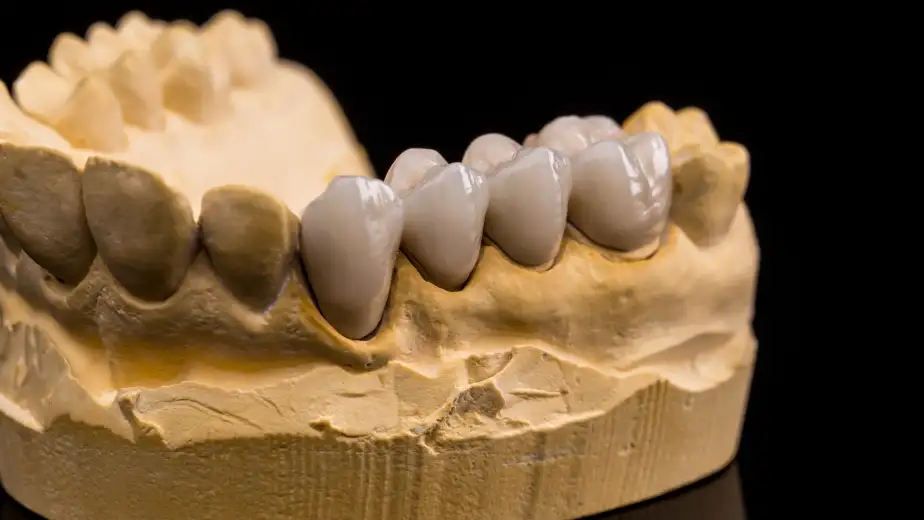
No. Composite fillings, crowns and veneers do not change colour. After whitening, restorations in the front region may need to be renewed to match the new shade. We plan this in advance for you.
Are at-home whitening products effective?
Their effect is limited, and uncontrolled use can damage the teeth. Products bought without a dentist’s supervision can cause gum irritation and uneven colour. For this reason we carry out whitening only in the clinic and do not send patients home with gels or trays. The safest method: professional in-office treatment.
Aftercare Following Teeth Whitening
What you do after whitening is very important for how long the results last.
The first 48 hours (critical!)
- Do not drink coffee, tea or red wine
- Do not smoke
- Avoid strongly coloured foods, because the whitening process is still ongoing
- Prefer light-coloured foods such as chicken, rice, pasta, yoghurt and white cheese
What to pay attention to afterwards:
- Brush your teeth regularly
- Limit staining foods and drinks
- Drink coffee and tea through a straw where possible
- Use the products your dentist recommends
- Come in for check-ups at regular intervals
Sensitivity in the first few days is normal. Toothpastes formulated for sensitivity can help during this period.
How Long Do the Results Last?
Whiteness fades gradually rather than suddenly. In non-smokers with good oral hygiene, results generally hold well for 1–2 years. In people who smoke or drink a lot of coffee, the colour may begin
to return within 6–12 months.
When the colour begins to fade, a refresh session in the clinic is usually enough to restore the result. Regular check-ups and professional cleaning also help keep the whiteness for longer.
Who Is Teeth Whitening Suitable For?
- People whose teeth have yellowed
- Anyone who wants a more attractive smile
- People preparing for a special occasion
- Those with smoking or coffee stains
- Patients whose teeth have darkened naturally with age
Teeth Whitening in Eskişehir | Frig Dent
Frig Dent, which offers modern dentistry services in Eskişehir, carries out teeth whitening safely, quickly and effectively with the Opalescence in-office system.
With personalised planning, a natural and healthy whiteness is achieved. Before treatment we assess your dental and gum health, discuss a realistic target shade with you and choose the method best
suited to you.
Teeth whitening is one of the most effective ways to achieve an attractive smile in a short time. With the right treatment and aftercare, long-lasting results can be maintained.
For professional teeth whitening in Eskişehir, the right address is: Frig Dent.