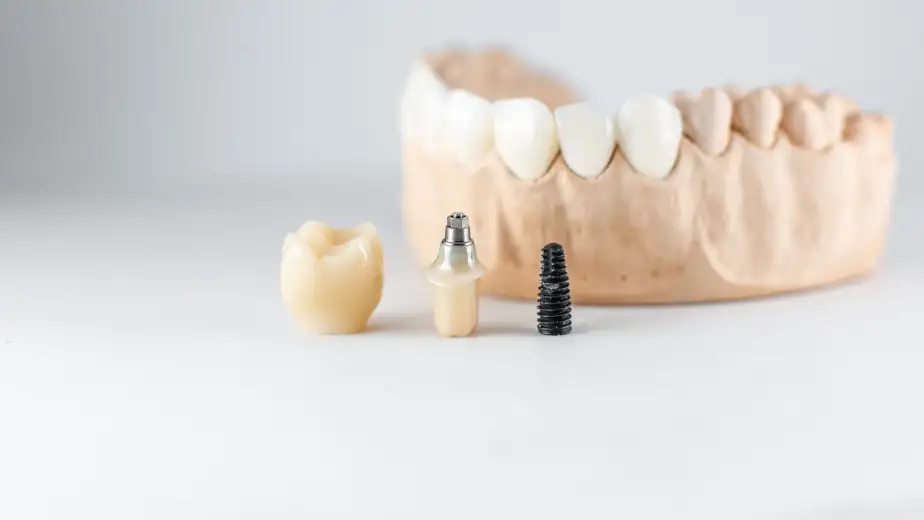
Missing teeth are a significant problem that directly affects both your appearance and your oral health. Today, one of the most modern and long-lasting solutions for replacing missing teeth is dental implant treatment. In recent years, ceramic implant systems — developed as an alternative to classic titanium implants — have been attracting a great deal of attention. Ceramic implants stand out in particular for patients who want a natural look, a biocompatible material and metal-free treatment.
As Frig Dent Eskişehir Dental Clinic — the only dental clinic in Eskişehir that places ceramic implants — we take a detailed look in this article at the questions patients ask most: what a ceramic implant is, what its history is, what advantages it offers and why it should be chosen.
What Is a Ceramic Implant?
A ceramic implant is an implant system usually produced from zirconium dioxide, a highly durable material. Zirconia is a strong and aesthetic material widely used in modern dentistry, both in prosthetics and in implantology.
Unlike titanium implants, ceramic implants are white. This provides a more natural appearance, especially in the front tooth region. Even if gum recession occurs, no grey metal shows through. For this reason, ceramic implants are frequently preferred by patients with high aesthetic expectations, those who want a natural appearance and those looking for metal-free treatment.
The History of Ceramic Implants
The use of ceramic materials in medicine goes back a long way. A 1972 scientific publication titled
History of Ceramic Orthopedic Implants notes that ceramics had already been used for many years in bone repair and orthopaedic applications. According to that work, the foundations of ceramic-based biomaterials reach back to the late 19th century. From the 1960s onwards, intensive research was carried out on biocompatible ceramic materials, and structures capable of integrating with bone were developed. These advances were later reflected in dentistry as well.
In dental implantology, the rise of ceramic implants gained momentum in the 2000s. Zirconia implant systems developed by Swiss-based manufacturers in particular opened a new era in the field.
In 2004 the first ceramic implant systems received CE certification, and in the following years they began to spread across the European and American markets. Today, thanks to digital impression systems, CAD/CAM technologies and advanced surface designs, ceramic implants deliver far more successful results.
Why Choose a Ceramic Implant?
1. Natural and Aesthetic Appearance
One of the greatest advantages of ceramic implants is that they come in white tones close to the colour of a natural tooth.
With titanium implants, a grey metallic reflection can occasionally be seen if the gums recede. With ceramic implants, this risk is much lower. This is an important advantage for patients who want an aesthetic result, especially in the front tooth region.
2. A Metal-Free Treatment Option
Some patients may not want metal in their body, or may simply prefer a metal-free lifestyle. Ceramic implants are an important alternative here. Ceramic implants can be a good choice for people with metal sensitivity or for those who place particular importance on biological compatibility.
3. Biocompatible Structure
Zirconia ceramics are among the materials that can integrate very well with oral tissues. Thanks to
their gum-friendly structure, they can create a healthy and natural appearance. This is a particular advantage for patients who care about gum aesthetics.
4. Durability
Zirconia implants developed with modern production technologies are extremely strong. They are resistant to everyday chewing forces. With correct planning, correct surgical placement and good oral hygiene, they can be used for many years.
5. Potentially Reduced Plaque Accumulation
Some studies suggest that zirconia surfaces may offer an advantage in terms of bacterial adhesion.
This may have a positive effect on gum health. That said, regular care is important with every type of implant.
Who Is a Ceramic Implant Suitable For?
Ceramic implant treatment may be suitable for the following people:
- Patients missing a single tooth
- People missing more than one tooth
- Patients with high aesthetic expectations in the anterior region
- Those who want a metal-free implant
- People who care about the appearance of their gums
- Patients looking for a healthy, long-lasting solution
However, the most appropriate implant type for each patient must be determined after a clinical examination and radiological assessment.
Ceramic Implant or Titanium Implant?
This is a question patients ask often. Both implant types have their advantages.
Titanium implants: They have been in use for many years and have an extensive clinical track record.
Ceramic implants: They are preferred for their aesthetics, metal-free structure and biological
compatibility.
Which implant is the right one depends on bone structure, aesthetic expectations, general health and the dentist’s assessment.
How Does Ceramic Implant Treatment Proceed?
- Ceramic implant treatment generally consists of the following stages:
- Clinical examination
- Panoramic X-ray or 3D tomography
- Treatment planning
- Implant placement
- Healing period
- Placement of the final prosthesis or crown
In some suitable cases, same-day temporary teeth are also possible.
What Should You Pay Attention to After a Ceramic Implant?
Aftercare is important for successful results:
- Brush your teeth regularly
- Clean between the teeth with floss and interdental brushes
- Reduce or quit smoking
- Attend your follow-up appointments regularly
- Avoid biting hard objects
- Follow your dentist’s recommendations
With the right care, the lifespan of implants can increase considerably.
Ceramic Implant Treatment in Eskişehir
For patients in Eskişehir looking for aesthetic, modern dental treatment, ceramic implants are becoming an increasingly popular choice. They are an effective option in particular for people who want a natural look, prefer to avoid metal and are looking for a long-lasting solution.
At Frig Dent Eskişehir Dental Clinic, we prioritise up-to-date technology, personalised planning and an aesthetic approach in our implant treatments.
Conclusion
Ceramic implants are a modern, aesthetic and biocompatible treatment option for missing teeth. Ceramic biomaterials, whose history goes back many years, have become far more successful today thanks to advanced technology.
With advantages such as a natural appearance, a metal-free structure, strong durability and gum compatibility, ceramic implants are a frequent choice today.
If you too are looking for a permanent and aesthetic solution for missing teeth, get in touch with Frig Dent Eskişehir Dental Clinic for a detailed examination and a personalised treatment plan.